Saturday, February 26, 2005

Against technological determinism 1.0

In studying people's use of writing technologies, I'm often concerned on the influence of the tool on how the activity it mediates unfolds. But technologies are only really influential if they're used in expected ways. A recent Boing Boing post cites a piece that refers to the hacker virtue of "User innovation and the lack of passivity".

I read about the same phenomenon recently in Neal Stephenson's Zodiac:
"Old hardware clerks have learned the hard way that nothing in a hardware store ever gets bought for its nominal purpose. You buy something that was designed to do one thing, and you use it for another." (p. 64)

Here's a resource for all active, innovative users: http://www.eleganthack.com/
[oh and see! what'd I tell ya?]

Thursday, February 24, 2005

New Job!!!

I've just accepted a position in the Department of English at DePaul University in Chicago.

Wednesday, February 23, 2005

Artistic Proof 1.0: A Maxim

"A poor carpenter blames his tools."

Monday, February 21, 2005

Thursday, February 17, 2005

Wired Courtrooms

Lawyers and judges need to coordinate texts too. This month's Wired includes "For Verdict, Click Here," a description of the technologically-enhanced Ninth Judicial Circuit Court of Florida. (http://www.Ninja9.org/ -- I swear that's their real URL)

Built-in handhelds for lawyers (from Wired.com) Posted by Hello

Monday, February 07, 2005


Uncoordinated text! Posted by Hello

[Update: Sorry... broken link.]

Put the information where you'll need it

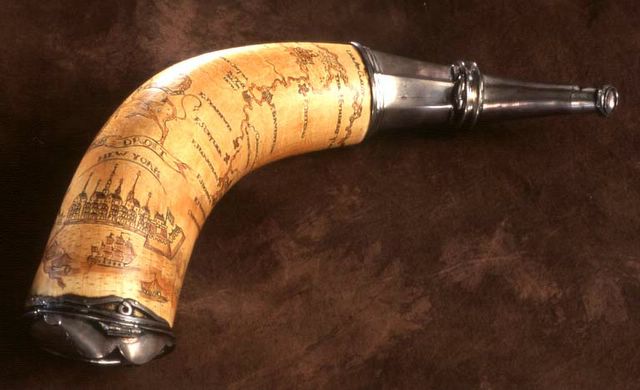
Another L.O.C. image, a "Powderhorn Map -- Powder horn inscribed with map of Hudson and Mohawk river valleys."

Put the information where you'll need it. Posted by Hello

Text Coord 1.3

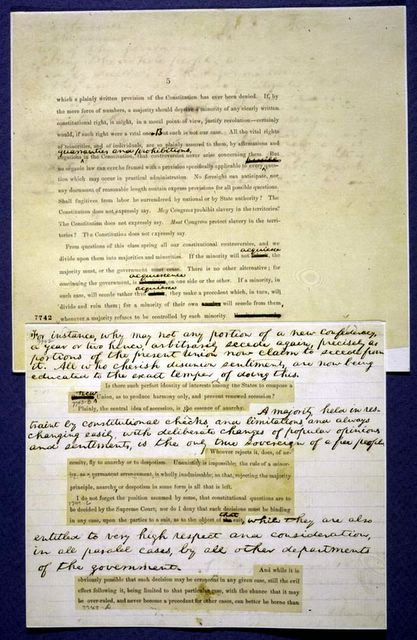
Cutting and pasting to co-locate text for coordination -- the way Lincoln used to do it. (From the Library of Congress page on Lincoln's First Inaugural Address.)

The original cut and paste. Posted by Hello

Saturday, February 05, 2005

Textual Coordination 1.2

Here's a rather famous case of annotation -- the drafting of the Declaration of Independence. For a long time, we've found this process useful:
  1. Create draft (text 1)
  2. Annotate (text 2) to guide...
  3. future revision (text 3)
  4. repeat as needed

Rough draft of the Declaration of Independence Posted by Hello

This image comes from the Library of Congress website. Check out the images of the correction flap in the up and down position. Annotation = textual co-location.

(Notice there are far fewer revisions to the draft of the Gettysburg Address. It's so much harder to write by committee!)

Friday, February 04, 2005

Textual Coordination 1.0

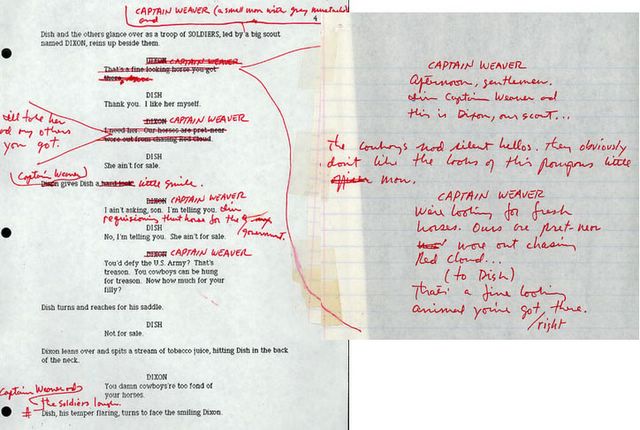
One way we coordinate texts, especially ones produced at different times, is to place them physically near each other. This image from a site about producing the Lonseome Dove movie shows two different modes of annotation that are very familiar.


Annotation: 1 kind of coordination Posted by Hello