Tuesday, May 23, 2006
When to update

Thursday, May 11, 2006
As we may work...
Via: VideoSift
And I'll have to fly out of O'Hare soon to check out their "'Minority Report' Style Billboards."
Thursday, March 16, 2006
Presenting at 4Cs
Bringing Techne Front and Center: Examining the Materials of the Art of Writing
J.13, Friday, 3:30–4:45 p.m., Salon 2, Third Floor
Chair: Janice Lauer, Purdue University, West Lafayette, IN
Speakers:
- Pender Kelly, Purdue University, West Lafayette, IN, “Writing inLate Postmodernity: Contradictions of the Art”
- Shaun Slattery, DePaul University, Chicago, IL, “The Tool Side of Techne: ‘Habits of Mind’ vs. ‘Habits of Mediation’”
- Karl Stolley, Purdue University, West Lafayette, IN, “A Techne for Artful Choices in Digital Writing”
In a further investigation of the role of materials in an art of writing, I argue that most modern treatments of techne (usually translated as art or craft) focus solely on the writer’s “habits of mind.” Recent research into mediation, however, suggests a new approach to theorizing techne. Complex activity, such as writing, can also be influenced by immediate environmental conditions, such as the texts writers surround themselves with as they write. This researcher’s recent study of writers’ use of texts and technologies while composing suggest techne is as much a way of doing as a way of thinking. This view is consistent with classical articulations of techne, which included examples of such material production as shipbuilding. This view is also consistent with Activity Theory which undergirds recent studies of mediation and argues that internal ways of thinking and external tool-use are mutually constitutive. Finally, and perhaps most importantly, this view suggests that teachers of writing should be attentive to mediated composing processes including the use of information technologies.In particular, I'll focus on how techne offers some attempt at control over contingency in complex information environments.
Stickie Situations
In discussing the announcement of cold fusion achieved at RPI, my friend Kevin Neal made an interesting movie reference/observation:
I thought of this conversation yesterday in that I watched some of The Saint again, and here is Elisabeth Shue’s character stuffing the 6 post-it note-sized slips of paper holding the “secret formula” for cold fusion into her bra for safekeeping... that seemed just a bit skimpy for cold fusion.
What an interesting point. Given that the RPI press release seems to describe a technological procedure, rather than “a formula,” I’m betting Kevin’s right. It could be a bit hard to describe that on a few yellow stickies. Seems my friends are much more critical movie watchers than I am.
Friday, March 03, 2006
Wiki Woes
I coauthored an article on the rhetoric of clinical trial reports with two coauthors this past fall. We used a wiki that one of us ran off a home server to provide writing and commenting space and to control versions. It worked reasonably well, except for having to get used to missing Word tools--track changes, comments--and Word features, such as the stylesheet. It all had to be exported from the wiki and formatted according to editorial guidelines. I think the lack of format controls and markup language in the wiki was the primary limitation.His comments show a nice awareness of the tradeoffs of various technologies. It sounds like his writing group encountered no major problems, but I've heard of writers new to wikis can be uncomfortable with having others edit their words. While this is often true of new collaborative writers in general, I believe wikis -- because the authority to edit is built into the software -- automate the subtle permission-getting that happens in face-to-face or pass-the-draft-around collaboration. To be comfortable with wikis, I suspect writers need to be comfortable with collaborative writing more generally and be aware of wiki protocol.
Friday, February 17, 2006
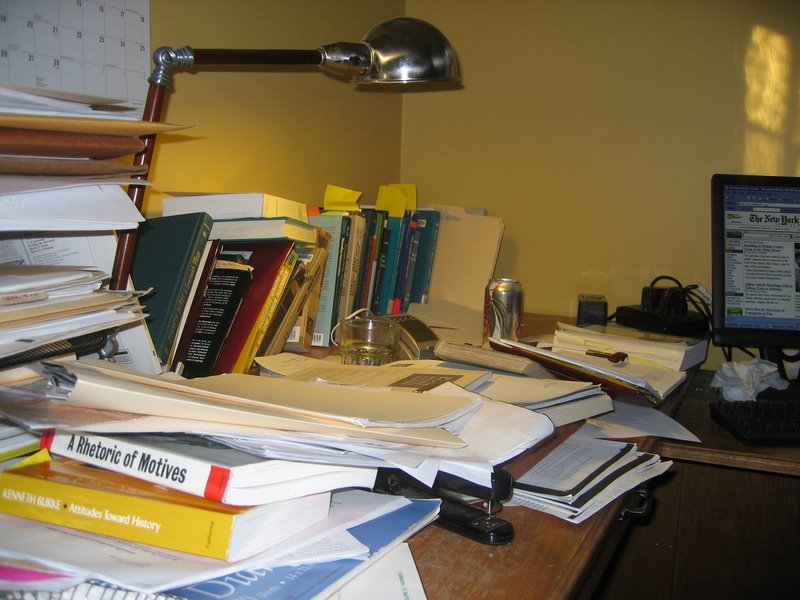
Speaking of many texts...
- Post-It note bookmarks to help find key places in the text
- Folders for grouping like/related info
- Is it a Swingline? Also for keeping related texts together
- The invevitable photocopied journal articles
- Spiral notebook for creating new texts
- Calendar, for coodinating the production of text over time
- A buncha Burke
- A folder organizer to help stage texts for later use (ditto the row of books)
- Crumpled paper -- an unsuccessful text?
- The Computer -- where it all comes together
About the creation of new texts... I think we often create "ancillary" texts when writing -- they're not the thing we're writing but something we have to create *toward* the thing we're writing.
What we can't see (here) is what all happened on-screen (like the "100+ footnotes" etc.). My desk is often relatively clean, because many of my texts are electronic. That's why I used screen-capture software when studying writing [example, 19M].
T.C. in the wild...
My friend Carrie Gilbert, a user-experience designer for White Horse spotted a textual coordination problem in the wild! She shared it with me…
cowboyboo: oh hey, I witnessed *textual coordination* the other day… and then proposed improvements to an online app to decrease the number of texts the user was dependent upon. I was *very excited*What made me particularly excited was some verification that spotting such problems creates an opportunity for intervention. By seeing textual coordination as a “thing” people do, we can intervene strategically to improve composing processes. Although, the statement "she saw no problem with it" seems to indicate a high threshold for coordination. Is it something we just learn to cope with? Does coordinating many texts impact the task? (I suspect so, but...)
Shaun: no way!
cowboyboo: it was funny, too, she saw no problem with it…
cowboyboo: "well, the app only does x, so then I go into SQL and run a query, and size that window beside this spreadsheet, and ...
Shaun: lol. so, really, did you stop and go, "This is a problem of textual coordination and I bet there’s a way to co-locate the text" or something like that?
cowboyboo: well, not quite like that, because although I'm a nerd, I'm not as big of one as *you* ;) ...
Shaun: few are
cowboyboo: I think I said, "wow, you're juggling a lot there, it would be great if we could display more of that data you need right there in the app so that you don't have to rely on so much stuff" or something
Thursday, February 16, 2006
Online Presentation
Friday, February 03, 2006
Simple Instructions
The instructions for Pong, the first video game: "Avoid missing ball for high score."

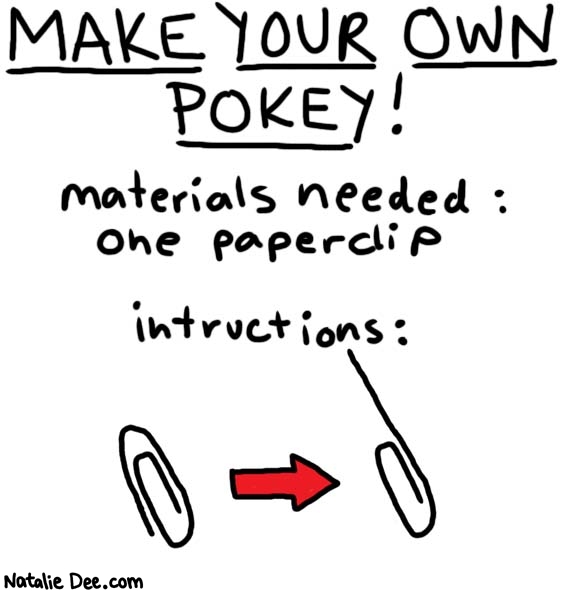
And the two rules for sumo wrestling, according to Jason at Signal vs. Noise. [Update: How 'bout these from Nataliedee?]
Nifty
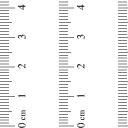
printable paper rulers
 [link: swissmiss; image: vendian.org]
Oh, and there's online graph paper... much better than my Excel hack. Thanks cooltools.